PCOS (PMOS) and Your Skin: What Your Breakouts Are Telling You
Clinically reviewed by Dr. Alessia Milano, ND, a licensed naturopathic doctor registered with the College of Naturopaths of Ontario (Reg. #3697). Last reviewed October 2026.
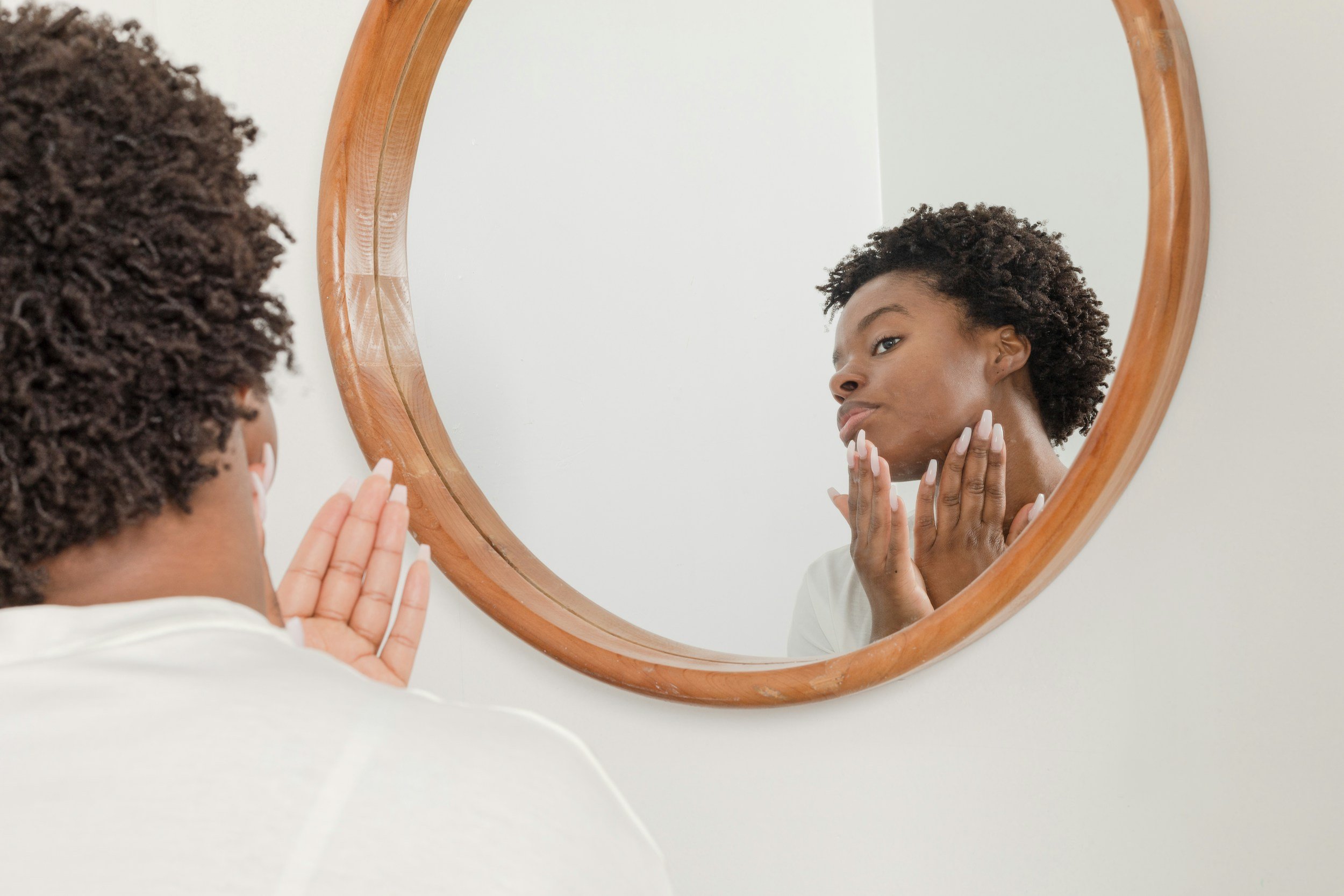
If you’re well past your teenage years but still dealing with stubborn acne, especially around your chin, jawline, or neck, your skincare routine may not be the whole story.
Acne is common, and having acne certainly doesn’t mean you have PCOS, now also referred to as Polyendocrine Metabolic Ovarian Syndrome (PMOS), but when persistent breakouts show up alongside irregular periods, unwanted facial hair, scalp hair thinning, or other hormonal symptoms, your skin may be giving us clues about what’s happening beneath the surface.
Let’s break down the connection between PMOS and acne, and what your breakouts might be telling you.
Why Can PMOS Cause Acne?
One of the hallmark features of PMOS is increased androgen activity.
Androgens are often called “male hormones,” but everyone produces them. In PMOS, androgens such as testosterone may be elevated, or there may be increased activity of androgens at the level of the skin.
Androgens can stimulate the sebaceous glands in your skin to produce more oil, also known as sebum. When excess sebum combines with dead skin cells and inflammation, pores can become clogged and acne can develop.
This is why androgen-related acne often appears alongside other signs of increased androgen activity, such as unwanted facial or body hair and thinning hair on the scalp.
Androgens are only one part of the picture. Insulin, ovulation, genetics, inflammation, stress, medications, skincare products, and other factors can all influence acne too.
What Can Your Breakout Pattern Tell You?
Where and when you break out can sometimes provide useful information, but acne location alone cannot tell us what is causing your acne.
Chin, Jawline, and Neck Acne
Persistent acne concentrated around the lower face, particularly the chin and jawline, is commonly seen with hormonal acne.
These breakouts may be deeper, inflamed, painful, or cystic and can continue well beyond the teenage years.
Jawline acne by itself does not diagnose PMOS. However, if you’re experiencing persistent lower-face acne alongside irregular or absent periods, unwanted facial hair, or scalp hair thinning, it may be worth investigating whether androgen excess or PMOS is contributing.
Breakouts Before Your Period
Do you notice your skin consistently worsening in the week before your period?
Hormonal fluctuations throughout a normal menstrual cycle can influence oil production and inflammation, so some premenstrual acne can occur even without PMOS.
What catches our attention more is when these cyclical breakouts are severe or persistent and happen alongside signs that ovulation or androgen regulation may be disrupted.
Acne + Oily Skin
Androgens stimulate the sebaceous glands, which means increased androgen activity may show up as both acne and noticeably oily skin.
Some people may also notice an oilier scalp alongside changes in their skin.
Again, oily skin alone doesn't tell us that androgens are elevated. It becomes more meaningful when we look at the entire symptom picture.
Look Beyond the Breakouts
Your skin isn't the only place increased androgen activity can show up.
If you're experiencing acne, it can be helpful to ask whether you've also noticed:
New or increased hair growth on the chin, upper lip, chest, or abdomen
Thinning hair around the crown or a widening part
Irregular, long, or missing menstrual cycles
Difficulty identifying whether you're ovulating
Other signs of metabolic or hormonal dysfunction
The combination of symptoms can tell us much more than acne alone.
What Does Insulin Have to Do With Your Skin?
This is one of the most important, and sometimes overlooked, pieces of the PMOS acne puzzle.
Insulin is a hormone that helps move glucose from your bloodstream into your cells. When your cells become less responsive to insulin, your body may compensate by producing more of it.
Higher insulin levels can stimulate the ovaries to produce more androgens. Insulin can also reduce sex hormone-binding globulin (SHBG), a protein that binds hormones such as testosterone in the bloodstream. Lower SHBG can mean a greater proportion of testosterone is available to act on tissues such as the skin.
For some people, this combination can contribute to acne, increased facial hair, or scalp hair thinning.
Importantly, insulin resistance can occur across body sizes, and a normal fasting glucose result doesn't necessarily provide a complete picture of how your body is regulating insulin.
When Should You Consider Investigating PMOS?
Acne alone isn't enough to diagnose PMOS.
Persistent adult acne may warrant a deeper look when it's accompanied by symptoms such as irregular or absent periods, long menstrual cycles, excess facial or body hair, scalp hair thinning, difficulty ovulating, or fertility concerns.
Instead of asking only, “How do I get rid of my acne?” we may also want to ask:
Why is this acne happening in the first place?
What Can Blood Work Tell Us?
When acne appears alongside symptoms suggestive of PMOS, blood work can help us better understand the hormonal and metabolic picture.
Depending on your individual presentation, testing may include androgen markers such as total testosterone, free testosterone, SHBG, DHEA-S, and androstenedione.
We may also want to look at metabolic markers such as fasting glucose, fasting insulin, HbA1c, and a lipid panel.
Additional testing may be appropriate to assess menstrual cycle function or rule out other conditions that can cause similar symptoms.
The goal isn't simply to order as many hormones as possible. Blood work is most useful when we interpret it alongside your menstrual cycle, symptoms, medical history, and overall clinical picture.
Treating PMOS Acne Means Looking Beyond the Skin
Skincare can absolutely be part of managing acne, and for some people, figuring out what topicals to use can be incredibly helpful.
However, if PMOS is contributing to your acne, we also want to address what may be driving the symptoms internally.
Depending on the person, that could mean improving insulin sensitivity, supporting regular ovulation, addressing elevated androgen activity, improving sleep and stress management, or making nutrition and movement changes that support metabolic health.
There isn't one universal “PMOS acne diet” or supplement protocol that works for everyone.
The most effective approach starts with understanding what is driving your symptoms and building treatment around that.
Your Skin Is One Piece of the PMOS Puzzle
Your breakouts can't diagnose PMOS, but they can provide useful clues.
If you've been treating your acne for years without understanding why it keeps returning, particularly if you're also dealing with irregular cycles, unwanted facial hair, scalp hair thinning, or other hormonal symptoms, it may be worth looking beyond the surface.
Your skin may be showing you one piece of a much bigger hormonal and metabolic picture.

Ready to Look Deeper?
Struggling with persistent acne or wondering whether PCOS/PMOS could be contributing to your symptoms?
Book a complimentary 15-minute consultation to explore how individualized naturopathic care may support you.
Be well,
Dr. Simone Pirita, ND
Frequently Asked Questions About PCOS/PMOS Acne
Can PCOS cause acne even if my periods are regular?
Yes. Some people with PMOS have relatively regular menstrual cycles while experiencing other symptoms of increased androgen activity, including acne or unwanted facial hair. Regular periods alone don't necessarily rule out PMOS, although acne by itself isn't enough to establish a diagnosis.
What does PCOS-related acne look like?
PMOS-related acne may appear as persistent, inflamed, or deeper breakouts, often around the chin, jawline, or lower face. However, there is no single acne pattern that confirms PMOS. Other symptoms, such as irregular periods, excess facial hair, or scalp hair thinning, provide important context.
Can insulin resistance make hormonal acne worse?
It can. Higher insulin levels may increase androgen production and reduce sex hormone-binding globulin (SHBG), potentially increasing the amount of testosterone available to affect the skin. This can contribute to excess oil production and acne in some people with PMOS.
Will changing my diet help with PCOS acne?
Nutrition may help support insulin sensitivity and metabolic health, which can influence androgen-related symptoms in some people with PMOS. However, there is no single diet proven to clear PMOS acne, and dietary changes aren't a substitute for appropriate acne treatment.
What blood tests should I ask for if I suspect PCOS?
Depending on your symptoms, your healthcare provider may consider testosterone, SHBG, DHEA-S, and other androgen markers, alongside metabolic screening such as glucose, HbA1c, and a lipid panel. Testing should be individualized, and blood work alone cannot confirm or rule out PMOS.